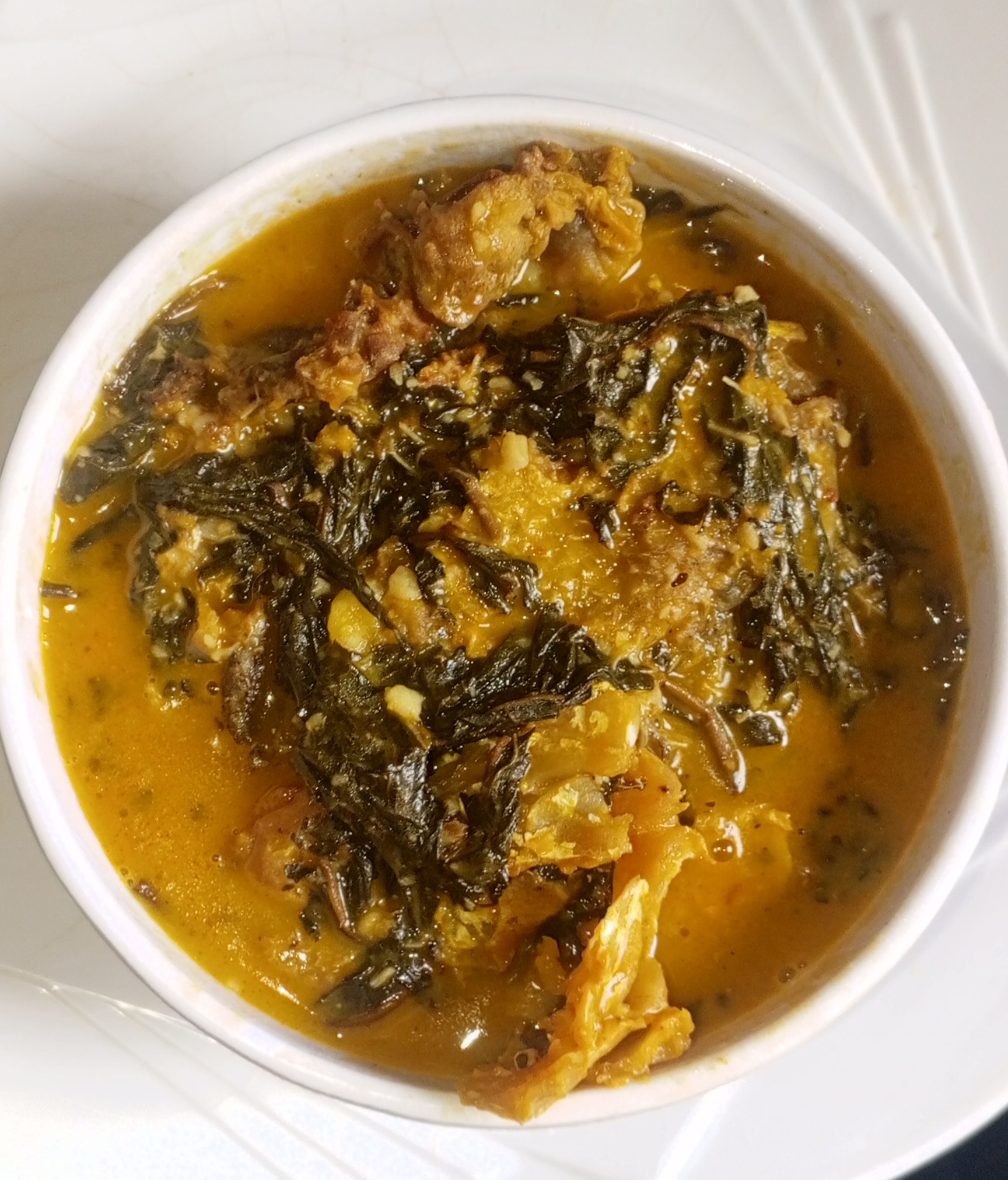
Bitter leaf soup, known as Ofe Onugbu in Igbo cuisine, is one of the most beloved traditional soups in Nigeria. Rich, flavorful, and deeply satisfying, this soup is commonly served with pounded yam, fufu, or garri.
Despite its name, the soup is not supposed to taste bitter. The bitterness from the bitter leaves is usually washed away before cooking, leaving behind a perfectly prepared pot is actually savory, rich, and only carries a faint, pleasant hint of bitterness.
Ingredients
- Bitterleaf: Washed and squeezed (ensure most of the bitterness is gone).
- Cocoyam (Ede): Boiled and pounded into a smooth paste (the thickener).
- Palm Oil: For that signature golden glow and richness.
- Meats: Beef, shaki (tripe), or cow skin (ponmo).
- Dried Fish & Stockfish: For that deep, smoky umami base.
- Ground Crayfish: Don’t be stingy with this!
- Ogiri Igbo: The “secret sauce” (fermented oil bean seeds) for that pungent, traditional aroma.
- Seasoning: Fresh pepper (Atarodo), bouillon cubes, and salt to taste.
- Water or meat stock as needed
How to Prepare the Bitter Leaves
Fresh bitter leaves can be quite bitter if they are not washed properly. The goal is to reduce the bitterness while still keeping the unique flavor that makes this soup special.
To wash bitter leaves:
- Place the leaves in a large bowl.
- Add enough water to cover them.
- Rub and squeeze the leaves between your hands.
- Pour away the dark green water.
- Repeat this process several times until the bitterness is reduced.
Some people prefer their bitter leaf soup slightly bitter, while others wash the leaves thoroughly to remove most of the bitterness. You can adjust it according to your taste.
If you are using already washed bitter leaves sold in markets, you may only need to rinse them lightly before cooking.
Step-by-Step Method
Prep the Cocoyam
Wash the cocoyams and boil them with the skins on until tender. Peel them while hot and pound in a mortar (or blend with a little water) until you have a smooth, stretchy paste.
Cook the Meat
Place the assorted meat and stockfish in a pot. Add chopped onions, seasoning cubes, salt, and a little water. Cook until the meat becomes tender. When the meat is nearly done, add the dried fish and let it soften. This will form a flavorful stock that will serve as the base of the soup.
Add Palm Oil and Crayfish
Once the meat is cooked, add palm oil, ground crayfish, pepper and ogiri, allow the soup to cook for about 5 minutes so the flavors begin to combine. This is where the kitchen starts smelling like a real Igbo kitchen!
Add the Thickener
Add the cocoyam paste in small portions. Allow it to dissolve gradually in the soup while cooking.
Cocoyam is the traditional thickener used in bitter leaf soup and gives it its rich texture. Let it cook for about 10 minutes until the soup begins to thicken. Add more water as needed if it’s too thick.
Add the Bitter Leaves
Now add the washed bitter leaves and stir gently. Allow the soup to simmer for another 5–7 minutes so the leaves blend well with the soup.
Adjust Seasoning
Taste the soup and adjust salt or seasoning if needed. Allow everything to cook together for another 3 minutes, then turn off the heat.
Your delicious bitter leaf soup is ready.
What to Serve with Bitter Leaf Soup
Bitter leaf soup pairs beautifully with many Nigerian swallow foods:
- Pounded yam
- Garri (eba)
- Fufu
- Semolina
- Amala
The rich soup and the smooth swallow make a truly satisfying meal.
Different Ways to Cook Bitter Leaf Soup
There are a few variations of bitter leaf soup across Nigeria.
With Cocoyam
This is the most traditional method. Cocoyam gives the soup a rich texture and slightly thick consistency.
With Achi or Ofor
Some people use achi or ofor as thickening agents instead of cocoyam. These work well and are easier to prepare.
With Egusi
In some homes, ground egusi (melon seeds) is added to give the soup extra richness.
Each version still keeps the distinctive flavor of bitter leaves and palm oil.
Tips for the Best Bitter Leaf Soup
Wash the leaves properly
If the leaves are too bitter, the soup will not taste balanced.
Use good palm oil
Quality palm oil adds both color and flavor to the soup.
Don’t overcook the leaves
Adding the leaves towards the end keeps the soup fresh and flavorful.
Use cocoyam for authentic taste
Although other thickeners can work, cocoyam gives the traditional texture.

How to Make Nigerian Bitter Leaf Soup (Ofe Onugbu) – Step-by-Step Recipe
Course: Soups6-7
servings20
minutes50
minutes300
kcal1
hour10
minutesIngredients
600g washed bitter leaves
Assorted meat (beef, cow skin, or goat meat)
1 head stockfish
2 pieces dry fish
1 medium onion
3 tablespoons ground crayfish
1 tablespoons ogiri (fermented locust beansl)
½ cup palm oil
seasoning cubes
Salt to taste
765g cocoyam paste (or cocoyam powder for thickening)
Pepper to taste
Water or meat stock as needed
Directions
- Wash the cocoyams and boil them with the skins on until tender. Peel them while hot and pound in a mortar (or blend with a little water) until you have a smooth, stretchy paste.
- Place the assorted meat and stockfish in a pot. Add chopped onions, seasoning cubes, salt, and a little water. Cook until the meat becomes tender. When the meat is nearly done, add the dried fish and let it soften.
- Once the meat is cooked, add palm oil, ground crayfish, pepper and ogiri, allow the soup to cook for about 5 minutes so the flavors begin to combine
- Add the cocoyam paste in small portions. Allow it to dissolve gradually in the soup while cooking.
- Let it cook for about 10 minutes until the soup begins to thicken. Add more water as needed if it’s too thick.
- Now add the washed bitter leaves and stir gently. Allow the soup to simmer for another 5–7 minutes so the leaves blend well with the soup.
- Taste the soup and adjust salt or seasoning if needed. Allow everything to cook together for another 3 minutes, then turn off the heat.
- Your delicious bitter leaf soup is ready.
Storage and Reheating Tips
If you have leftover bitter leaf soup, you can store it easily.
Allow the soup to cool completely.
Transfer it into an airtight container.
Store it in the refrigerator for up to 3–4 days.
When reheating, add a small amount of water or stock to restore the soup’s consistency before warming it on the stove.
Bitter leaf soup also freezes well, making it convenient for future meals.
Frequently Asked Questions
Is bitter leaf soup actually bitter?
No. When the leaves are washed properly, the bitterness is greatly reduced and the soup tastes rich and savory.
Can I use dried bitter leaves?
Yes. Dried bitter leaves are easier to prepare since they usually require less washing.
What can I use instead of cocoyam?
Some people use:
Achi
Ofor
Egusi
Corn flour (as a last option)
However, cocoyam gives the most authentic result.
Bitter leaf soup is a beautiful representation of Nigerian traditional cooking. With its deep flavors and nourishing ingredients, it remains a favorite in many homes.
Whether you’re cooking it for family dinner or a special occasion, this soup is always comforting and satisfying. If you enjoy traditional Nigerian recipes, this bitter leaf soup is definitely one to keep in your kitchen rotation.
Related Recipes You May Enjoy
If you enjoy traditional Nigerian dishes, you may also like these recipes:
How to Make Smooth Semovita Every Time(The Ultimate Guide to Lump-Free Semo)
How to Cook Oha Soup the Traditional Nigerian Way
How to Make Nigerian Chicken Stew with Dry Tomatoes & Tatashe
Zobo Drink Recipe (Nigerian Hibiscus Drink with Ginger & Lemongrass)
Leave a Reply