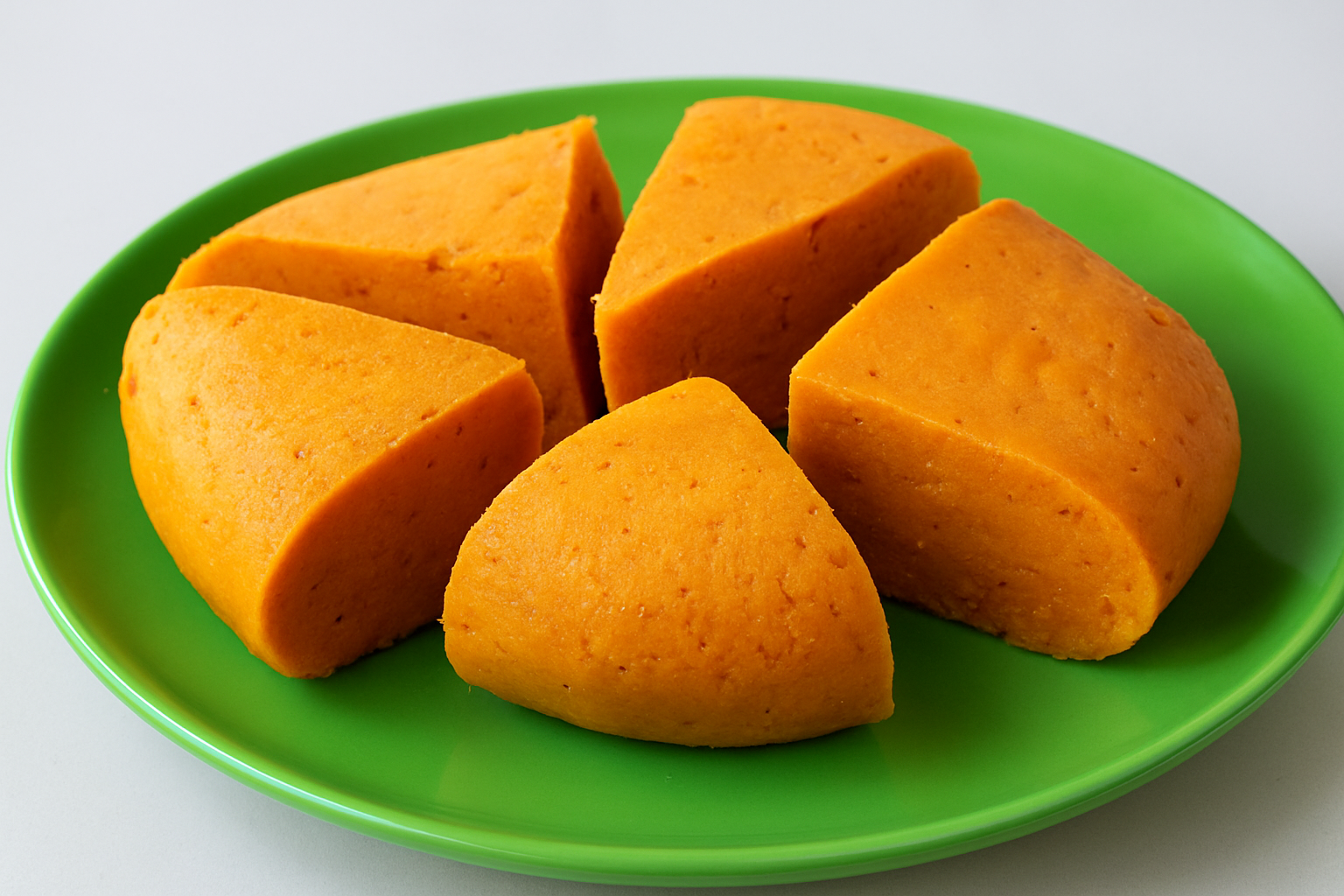
Okpa is one of Nigeria’s most treasured traditional foods — hearty, nourishing, and deeply rooted in culture. Popular especially in Eastern Nigeria, this golden steamed Bambara nut pudding is known for its smooth texture, rich palm oil color, and unmistakable aroma when wrapped in banana leaves.
For many, okpa is more than just food. It is breakfast on busy mornings. It is comfort bought from roadside vendors wrapped neatly in warm leaves. It is the taste of home.
The first time I had Okpa was in Nsukka, and it was love at first bite. Soft, flavorful, and so filling – there was something deeply comforting about it. I remember how easily it became a part of my routine, from quick breakfasts to simple evening meals.
Years later, even after leaving Nsukka, that taste never left me. Now I still make Okpa in my home, and every time I unwrap it, it brings back that familiar warmth like a gentle reminder of simpler days.
If you’ve ever wondered how to make authentic okpa at home — soft, flavorful, and perfectly firm — this detailed guide will walk you through everything you need to know, including ingredients, technique, steaming tips, common mistakes, storage methods, and variations.
By the end of this post, you’ll be confident enough to make okpa like a pro.
What Is Okpa?
Okpa is a traditional Nigerian steamed pudding made from Bambara nut flour (also known as okpa flour), palm oil, water, and spices. It is typically wrapped in banana or plantain leaves before steaming.
Unlike moi moi (which is made from beans), okpa has a firmer, denser structure and a slightly nutty taste. It holds its shape well and can be sliced neatly.
Okpa is commonly enjoyed:
- As breakfast with pap (akamu)
- As a light lunch
- With custard
- With chilled drinks
- On its own as a filling snack
Because Bambara nuts are rich in protein and fiber, okpa is considered a nutrient-dense traditional food.
Ingredients
- 4 cups okpa flour (Bambara nut flour)
- 4½ cups lukewarm water
- 1 cup palm oil
- ½ teaspoon ground uziza seeds
- Salt to taste
- Pepper to taste.
- Banana leaves for wrapping (you can also use small heatproof bowls or nylon)
Each ingredient serves an important purpose.
Okpa flour – The main base, made from ground Bambara nuts.
Palm oil – Provides color, richness, and moisture.
Water – Hydrates the flour and creates batter structure.
Uziza seeds – Adds traditional aroma and mild spice.
Salt & pepper – Enhance flavor.
Banana leaves – Add earthy fragrance and traditional presentation.
Instructions
Step 1: Properly Mix Flour and Palm Oil
In a large mixing bowl, combine okpa flour and palm oil.
Mix thoroughly until the flour turns evenly yellow. Do not rush this step. Uneven mixing causes streaks or dry patches after steaming.
Pro Tip: Use your hands to rub oil into the flour for better distribution before adding water.
Step 2: Add Water Gradually
Slowly add lukewarm water while stirring continuously. The key here is gradual addition.
The batter should be smooth, lump-free, and thick but pourable — similar to thick pancake batter.
Consistency check:
If it’s too thick, okpa becomes dry and hard
If it’s too watery, okpa may not set properly
If you’re unsure, aim slightly on the thicker side rather than too watery.
Step 3: Add Seasoning
Add salt, pepper, and ground uziza seeds. Stir well until evenly distributed.
At this stage, you can taste a tiny bit of batter to adjust salt (before steaming).
Optional Add-ins:
- Ground crayfish
- Chopped onions
- Scent leaves
These are not traditional in the purest version but are sometimes added for variety.
Step 4: Prepare Banana Leaves
If using banana leaves:
- Wash thoroughly.
- Pass quickly over low heat to soften.
- Wipe dry.
Heating makes them flexible and prevents tearing.
Scoop batter into the leaves and fold tightly.
Alternative: You can use small stainless bowls, ramekins, or foil containers if banana leaves are unavailable.
Step 5: Steam Properly
Pour water into a large pot — about 1–2 inches deep.
Do not let the water touch the wrapped okpa especially if you are using banana leaves.
Arrange the wraps carefully inside the pot. Cover tightly with a lid.
Steam for 45 minutes to 1 hour on medium heat.
Important: Check water level occasionally and top up if necessary. A heavy-bottomed pot helps distribute heat evenly and prevents burning.
Step 6: Check for Doneness
Okpa is done when:
- It feels firm to touch
- It separates easily from the leaf
- A toothpick inserted comes out clean
Allow to cool slightly before unwrapping.
Fresh okpa is soft but firm. As it cools, it becomes slightly firmer.
The Science Behind Perfect Okpa
Understanding the texture helps you master it.
When steamed, the proteins and starches in Bambara nut flour coagulate and set, forming a solid structure.
Too little water will result to tight, dense texture
Too much water will result to weak structure
Palm oil prevents dryness and improves mouthfeel.
Steaming time ensures full internal cooking.
Common Mistakes and How to Avoid Them
- Incorrect Batter Ratio
Always measure flour and water carefully. - Inadequate Steaming
Undercooked okpa may look firm outside but remain soft inside. - Too Much Palm Oil
Excess oil can cause greasiness and separation. - Poor Wrapping
Loose wrapping allows water to seep in.
Variations of Okpa
Although the original version is simple, some variations include:
Spicy okpa (extra pepper)
Onion-flavored okpa
Crayfish-infused okpa
Mini okpa cups for parties
Nutritional Benefits of Okpa
Bambara nuts are:
- High in plant protein
- Rich in fiber
- Contain essential minerals
- Naturally gluten-free
This makes okpa a satisfying, energy-dense food. It keeps you full for hours.
What to Serve with Okpa
Okpa pairs beautifully with:
Pap (akamu)
Custard
Soft drinks
Tea
Zobo

How To Make Okpa(The Original Recipe)
Course: Nigerian cuisines5-6
wraps15
minutes40
minutes55
minutesIngredients
4 cups okpa flour (Bambara nut flour)
4½ cups lukewarm water
1 cup palm oil
½ teaspoon ground uziza seeds
Salt to taste
Pepper to taste
Banana leaves for wrapping (you can also use small heatproof bowls or nylon)
Directions
- In a large mixing bowl, combine okpa flour and palm oil. Mix thoroughly until the flour turns evenly yellow
- Slowly add lukewarm water while stirring continuously.
- Add salt, pepper, and ground uziza seeds. Stir well until evenly distributed.
- Scoop batter into the leaves and fold tightly.
- Pour water into a large pot — about 1–2 inches deep.
- Arrange the wraps carefully inside the pot. Cover tightly with a lid.
- Steam for 45 minutes to 1 hour on medium heat.
- Insert a toothpick and when it comes out clean the Okpa is done
- Allow to cool slightly before unwrapping.
Frequently Asked Questions
Why is my okpa hard?
Batter may have been too thick or oversteamed.
Why is my okpa soft in the middle?
It likely needs more steaming time.
Can I make okpa without banana leaves?
Yes. Use small bowls or foil containers or white nylon (the Nigerian way)
Making okpa at home may seem intimidating at first, but once you understand the correct batter consistency and steaming method, it becomes straightforward. Authentic okpa is simple, nourishing, and deeply satisfying.
With the right ratio, proper mixing, and enough steaming time, you can recreate that warm roadside experience right in your kitchen. And once you master it, you’ll never need to rely on buying it outside again.
Check out these recipes too:
- How to Make Nigerian Bitter Leaf Soup (Ofe Onugbu) – Step-by-Step Recipe
- How to Make Smooth Semo Without Lumps (Easy Method)
- How to Make Abacha Without Potash (Easy Fry Method + Better Taste)
Leave a Reply