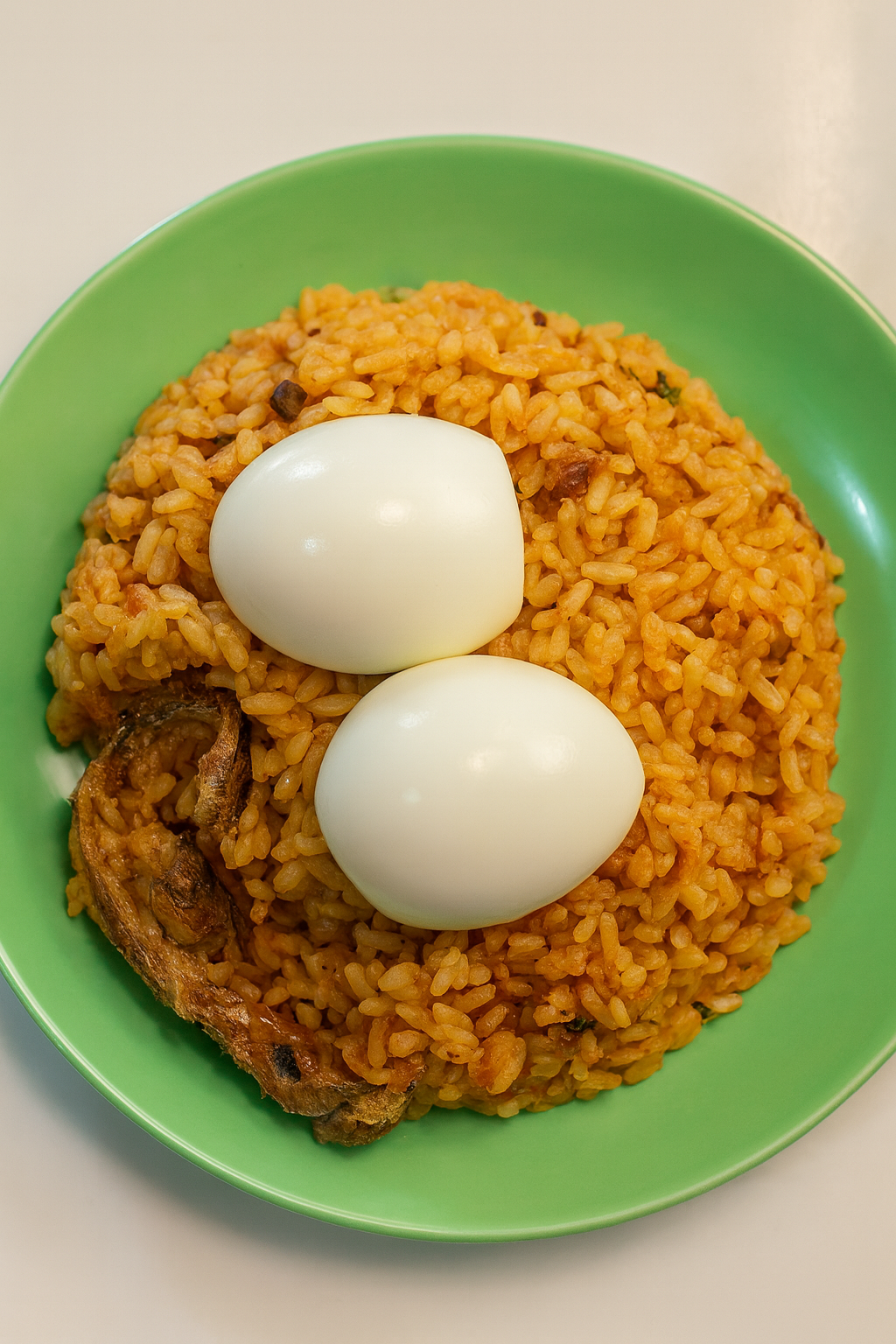
There are some meals you don’t cook every week… you cook them when your body is tired of modern food. That is what palm oil rice is for me.
In many Nigerian homes, we call it native rice or village rice. It is the food you make on a quiet afternoon, when you want something deeply traditional and full of real flavor — not the bright tomato taste of jollof rice, but the rich earthy taste of palm oil, crayfish and smoked fish.
Palm oil rice is simple, but it is not a careless meal. The difference between a watery pot and a truly satisfying one is how you build the flavor base. When cooked properly, every grain absorbs the palm oil sauce and comes out soft, rich and fragrant.
In this post, I will show you how to cook Nigerian palm oil rice step-by-step, the mistakes that make it soggy, and small tricks that make it taste like the kind you remember from grandma’s kitchen.
What is Palm Oil Rice?
Palm oil rice, also called native rice or village rice, is a traditional Nigerian rice dish cooked in a lightly seasoned palm oil sauce instead of tomato stew. Unlike jollof rice, it does not use blended tomatoes or peppers as the base. The flavor comes mainly from palm oil, onions, crayfish and smoked fish.It is especially common in the South-East and South-South parts of Nigeria, where simple but flavorful meals are preferred for everyday cooking.
This recipe uses water instead of meat stock, which makes it easier to prepare with pantry ingredients while still producing a rich taste. The key is allowing the palm oil, onions and crayfish to cook properly before the rice is added so the flavor develops before the rice absorbs the liquid. When done well, the rice is soft, slightly oily, deeply savory and very satisfying even without a heavy stew.
Palm Oil Rice vs Jollof Rice
Although both are one-pot rice dishes, palm oil rice is very different from jollof rice. Jollof rice is cooked in a tomato and pepper base and has a bright red color with a slightly tangy taste. Palm oil rice, on the other hand, uses red palm oil as the main flavoring and has a deeper, earthy and smoky flavor.
Another difference is the seasoning. Jollof rice depends heavily on blended peppers, curry and thyme, while native rice relies more on crayfish, onions and smoked fish for its taste.
Palm oil rice is usually softer and more comforting, while jollof rice is often cooked for parties and celebrations. Native rice is more of a home meal, the kind you cook when you want something filling and traditional.
Ingredients for Nigerian Palm Oil Rice
One thing that makes native rice special is that every ingredient plays a role in building flavor. Even though the recipe is simple, skipping or rushing any of them can make the rice taste flat.
Rice: Long grain parboiled rice works best. It cooks without becoming sticky and absorbs the palm oil sauce well. Always rinse the rice first to remove excess starch so the grains stay separate.
Palm Oil: Palm oil is the heart of this dish. It gives the rice its color, aroma and rich traditional taste. Do not bleach the oil — just warm it gently so it keeps its natural flavor.
Onions: Onions are very important in palm oil rice. They form the base flavor and balance the strong taste of the palm oil and iru.
Fresh Pepper: Fresh pepper adds warmth and liveliness to the rice. You can blend or simply pound it. The rice should not be very spicy, but it should not taste dull either.
Crayfish: Crayfish provides the deep savory taste that makes native rice satisfying even without meat stock.
Iru (Locust Beans): Iru gives the dish its traditional aroma and umami flavor. Only a small quantity is needed because it is very strong.
Smoked Fish: Smoked fish adds body and smokiness to the rice. It also helps flavor the cooking water, which replaces stock in this recipe.
Scent Leaves: Scent leaves are added at the end of cooking. They brighten the flavor and remove any heaviness from the palm oil, giving the rice a fresh traditional finish.
Salt and Seasoning: Use lightly. Native rice should taste natural, not overly seasoned like jollof rice.
How to Cook Palm Oil Rice (Step-by-Step)
1. Wash the Rice:
Measure your rice and rinse it in clean water 2–3 times until the water is no longer very cloudy.This removes excess starch and prevents the rice from becoming sticky or clumpy while cooking. Set aside.
2. Prepare the Fish
Wash the smoked fish and remove bones if necessary.Pour hot water over it and leave for about 3–5 minutes, then drain. This softens it and removes excess smoke and dirt.
3. Build the Flavor Base
Place a pot on medium heat and add the palm oil. Allow it to warm gently — do not bleach or overheat it.Add the chopped onions and fry for about 2–3 minutes until fragrant.Then add the iru and stir. At this stage, your kitchen should already smell rich and traditional. This step is important because frying the onions and iru in palm oil releases their flavor into the oil before the rice is added.
4. Add Pepper and Crayfish
Add the fresh pepper and crayfish. Stir and fry for another 1–2 minutes.This helps the palm oil carry the flavors throughout the rice.
5. Add the Fish and Water
Add the smoked fish and stir gently so it does not break too much.Pour in water (just enough to cook the rice — about 1 to 1½ cups above the rice level).
Add salt and seasoning cube, then taste the water. The water should taste slightly seasoned because the rice will absorb the flavor.
6. Add the Rice
Pour in the washed rice and stir once. Cover the pot and allow it to cook on medium heat until the water is almost absorbed.
7. Steam on Low Heat
Reduce the heat to low and cover tightly. Allow the rice to steam until soft. Avoid stirring too often because it can make the rice break and become mushy.
8. Finish with Scent Leaves
When the rice is soft and the water is dry, add the chopped scent leaves. Gently fold into the rice and cover again for 2 minutes. The residual heat will release the aroma without overcooking the leaves.
Your palm oil rice is ready when the grains are soft, lightly oily and fragrant.
Why Your Palm Oil Rice Lacks Color or Flavor
If your native rice turns pale, dull, or tastes flat, the problem is usually not the ingredients — it is the cooking process.
1. Not frying the palm oil long enough
Palm oil rice gets its attractive color when the oil is gently heated with onions first. If you add water too quickly, the oil does not develop flavor and the rice looks yellowish instead of rich orange. Allow the onions to fry properly before adding pepper or water.
2. Adding too much water
Too much water dilutes the palm oil sauce. Instead of coating the rice, the oil floats and the color becomes weak. The water should only be slightly above the rice level.
3. Skipping crayfish or using too little
Crayfish is what gives native rice its deep savory taste. Without it, the rice tastes plain even if seasoning cubes are added.
4. Overusing seasoning cubes
Palm oil rice is not jollof rice. Too much seasoning cube can make the taste sharp instead of rich. The flavor should mainly come from palm oil, fish, crayfish and iru.
5. Adding scent leaves too early
Scent leaves should go in at the end. If added while the rice is still boiling, the aroma disappears and the rice tastes ordinary.
Quick Fix Tip:
If the rice is already cooked but looks pale, you can heat 1–2 tablespoons of palm oil with a little onion in a small pan and gently mix it into the rice. It immediately improves both color and aroma.
What to Serve With Palm Oil Rice
Palm oil rice is filling on its own, but a simple side dish makes the meal more balanced. Because the rice is rich and slightly oily, something fresh or lightly sweet works best alongside it.
Good side options include:-
Fried plantain (dodo)
Grilled or fried fish
Boiled eggs
Fresh cucumber slices
Coleslaw
Coleslaw is especially a good match because the cool, creamy texture balances the warmth of the pepper and palm oil. If you have already prepared coleslaw, you can serve a small portion beside the rice for a complete meal.
Frequently Asked Questions
Can I cook palm oil rice without crayfish?
Yes, but the taste will be lighter. Crayfish provides the deep savory flavor native rice is known for. If you cannot use crayfish, increase the smoked fish slightly for more flavor.
Can I parboil the rice first?
It is not necessary. Native rice cooks best when the raw rice absorbs the seasoned water directly. Parboiling can reduce the flavor.
Can I cook palm oil rice without iru (locust beans)?
Yes. The rice will still cook well, but the traditional aroma will be missing. You can add more crayfish and smoked fish to compensate.
How do I make the rice more flavorful without meat stock?
Make sure to fry the onions, iru and pepper properly in palm oil before adding water. Also taste the cooking water before adding the rice — it should already taste seasoned.
Is palm oil rice the same as jollof rice?
No. Jollof rice is cooked in a tomato and pepper base, while palm oil rice is cooked in palm oil with crayfish, onions and traditional seasonings.

Palm Oil Rice (Native Rice) Recipe
Course: Nigerian cuisines, Rice Dishes4
servings10
minutes40
minutes300
kcalIngredients
2 cups Long grain rice
4-5 tablespoons Palm oil
2 medium Onions (chopped)
4-5 small fresh peppers (blended)
4 tablespoons ground crayfish
1 teaspoon Iru (locust beans)
Smoked fish (2 medium pieces)
½ cup chopped Scent leaves
Salt – to taste
2 Seasoning cubes (optional)
Directions
- Wash the Rice: Rinse rice 2–3 times until water is mostly clear. Set aside.
- Prepare the Fish: Wash smoked fish, pour hot water for 3–5 minutes, then drain.
- Fry the Flavor Base: Warm palm oil in a pot on medium heat. Add chopped onions and fry 2–3 minutes until fragrant. Add iru and stir for another 1 minute.
- Add Pepper & Crayfish: Stir in blended pepper and ground crayfish. Fry 1–2 minutes.
- Add Fish & Water: Add smoked fish gently. Pour in water (1–1½ cups above rice), add salt and optional seasoning cube. Taste water — it should be lightly seasoned.
- Add Rice: Pour in washed rice, stir once, cover, and cook on medium heat until water is almost absorbed.
- Steam on Low Heat: Reduce heat to low and cover tightly. Steam until rice is soft. Avoid stirring too often to prevent mushy grains.
- Finish with Scent Leaves: Add chopped scent leaves at the end, gently fold, cover 2 minutes to release aroma.
- Serve: Rice should be soft, slightly oily, and fragrant. Serve with coleslaw, fried plantain, or grilled fish.
Notes
- Tips / Troubleshooting:
- Rice turns pale: Fry palm oil with onions longer before adding water.
- Rice tastes bland: Ensure crayfish, smoked fish, and iru are included and water is lightly seasoned.
- Rice too oily: Use moderate palm oil and steam on low heat.Fresh color boost: Gently heat 1–2 tbsp palm oil with onion and fold into cooked rice.
🌿 From My Curious Kitchen!
Thanks for stopping by! If you enjoyed this post, subscribe to get more homemade recipes and traditional food stories straight from my kitchen to yours.
Leave a Reply