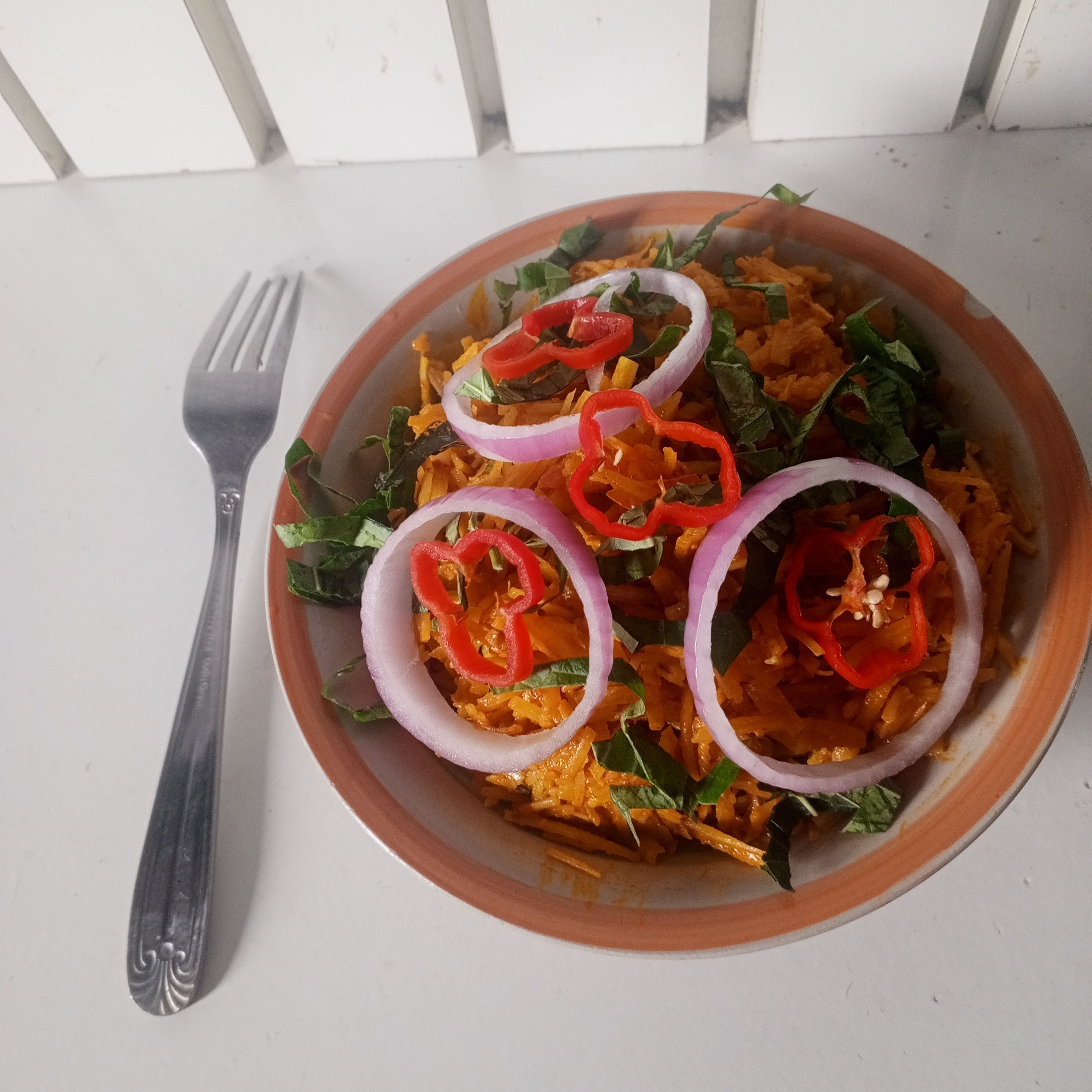
If you grew up attending traditional gatherings, village meetings, or weekend celebrations, you probably remember the unmistakable taste of Abacha. That bright yellow palm oil sauce. The soft, chewy cassava strips. The crunch of onions.The slight bitterness of utazi.
Abacha — also known as Nigerian African Salad — is bold, flavorful, and deeply cultural. It is especially popular among the Igbo people of Eastern Nigeria, but it is loved across the country and beyond.
In this step-by-step guide, I will show you exactly how to make authentic Abacha at home using traditional ingredients like ugba, palm oil, crayfish, ogiri, and potash (akanwu). Once you understand the technique, it becomes surprisingly simple.
What Is Abacha?
Abacha is a traditional Nigerian dish made from dried shredded cassava that has been fermented, cooked, and sun-dried. It is rehydrated and mixed with a seasoned palm oil sauce, then combined with ugba (oil bean slices), crayfish, pepper, and local spices.
Despite being called “African salad,” it is not a leafy salad. It is a flavorful cassava-based dish served at:
Traditional ceremonies
Weddings
Cultural festivals
Casual gatherings
Weekend family meals
Abacha is best served slightly warm or at room temperature.
Ingredients You’ll Need
Main Ingredients
3 cups dried Abacha (shredded cassava)
½ cup ugba (oil bean slices)
¾ cup palm oil (unbleached)
1 teaspoon potash (akanwu)
2 tablespoons ground crayfish
1 tablespoon ogiri (locust bean paste)
1 teaspoon ground pepper (adjust to taste)
1 seasoning cube
Salt (to taste)
1 small onion (thinly sliced)
Utazi leaves (thinly sliced, for garnish)
Optional Add-Ins
Cooked kpomo (cow skin)
Smoked fish
Garden egg slices
Cooking Tools You’ll Need
You don’t need complicated equipment, but these tools make preparation easier:
Large mixing bowl
Small bowl (for dissolving potash)
Wooden spoon (for mixing palm oil sauce)
Sharp knife (for slicing onions and utazi)
Colander (for draining soaked Abacha)
Instructions
Step 1: Soak the Abacha Properly
Place the dried Abacha in a large bowl. Pour hot water over it and let it soak for 5–10 minutes until soft.
Do not over-soak. It should be soft but still slightly firm. Drain in a colander and set aside.
If it feels too wet, gently squeeze out excess water.
Step 2: Prepare the Potash Solution
Potash (akanwu) is essential for creating the thick palm oil base. Use it carefully. Dissolve 1 teaspoon potash in 2–3 tablespoons warm water. Stir well.
Allow residue to settle. Use only the clear liquid. Too much potash will make the sauce bitter and overly thick.
Step 3: Make the Palm Oil Base
Pour palm oil into a dry mixing bowl. Do not heat it. Gradually add small amounts of the dissolved potash water while stirring continuously.
As you stir, the palm oil will:
Thicken
Turn orange
Become creamy
Stop adding potash once you reach a thick, smooth consistency. This creamy palm oil mixture is the heart of good Abacha.
Step 4: Season the Palm Oil Mixture
Add to the thickened palm oil ground crayfish, ogiri, ground pepper, seasoning cube and salt (if needed)
Mix thoroughly. Taste and adjust seasoning. The mixture should be:
Rich
Slightly spicy
Aromatic
Well balanced
If too thick, add a small spoon of warm water.
Step 5: Add Ugba and Onions
Add ugba (oil bean slices) to the seasoned palm oil mixture. Stir well.
Add sliced onions and mix again. At this stage, the mixture should smell deeply traditional — that combination of palm oil, ogiri, and crayfish is unmistakable.
Step 6: Combine with Abacha
Add the drained Abacha into the bowl. Mix gently but thoroughly until every strand is coated with the palm oil mixture.
Do not over-mix aggressively. You want it evenly coated but not mashed.
Step 7: Garnish and Serve
Sprinkle thinly sliced utazi leaves over the top. Utazi adds slight bitterness that balances the richness.
You can also garnish with:
Extra onions
Garden egg slices
Smoked fish
Kpomo
Serve slightly warm or at room temperature.
What Makes Good Abacha?
Perfect Abacha should be:
Soft but not soggy
Creamy but not watery
Spicy but balanced
Slightly chewy
Well coated in palm oil mixture
It should not be dripping with oil.
Common Mistakes to Avoid
1. Adding Too Much Potash
This makes the dish bitter and overly thick. Always add gradually.
2. Using Bleached Palm Oil
Bleached oil ruins the traditional flavor and color.
3. Over-Soaking the Abacha
Too much water makes it soggy.
4. Underseasoning
Palm oil needs proper seasoning to shine.
Can You Make Abacha Without Ugba?
Yes, but traditional Abacha includes ugba. Without it, the flavor will be simpler. You can increase crayfish slightly for depth.
How to Store Abacha
Abacha is best eaten fresh. If storing:
Keep in an airtight container Refrigerate for up to 24 hours. Before serving, allow it to return to room temperature.
Do not microwave excessively — palm oil may separate.
What to Serve with Abacha
Abacha is often served alone as a complete dish. But it pairs beautifully with:
- Nkwobi (Goat Meat in Palm Oil Sauce)
- Fried fish
- Palm wine
- Grilled meat

How to Make Abacha (Authentic Nigerian African Salad Recipe)
Course: Main4
servings20
minutes20
minutesIngredients
3 cups dried Abacha (shredded cassava)
½ cup ugba (oil bean slices)
¾ cup palm oil (unbleached)
1 teaspoon potash (akanwu)
2 tablespoons ground crayfish
1 tablespoon ogiri (locust bean paste)
1 teaspoon ground pepper (adjust to taste)
1 seasoning cube
Salt (to taste)
1 small onion (thinly sliced)
Utazi leaves (thinly sliced, for garnish)
- Optional Add-Ins
Cooked kpomo (cow skin)
Smoked fish
Garden egg slices
Directions
- Place the dried Abacha in a large bowl. Pour hot water over it and let it soak for 5–10 minutes until soft.
- Dissolve 1 teaspoon potash in 2–3 tablespoons warm water. Stir well. Allow residue to settle. Use only the clear liquid.
- Pour palm oil into a dry mixing bowl.Gradually add small amounts of the dissolved potash water while stirring continuously until it thickens and turn orange.
- Add to the thickened palm oil ground crayfish, ogiri, ground pepper, seasoning cube and salt (if needed) Mix thoroughly. Taste and adjust seasoning.
- Add ugba (oil bean slices) to the seasoned palm oil mixture. Stir well.Add sliced onions and mix again
- Add the drained Abacha into the bowl. Mix gently but thoroughly until every strand is coated with the palm oil mixture.
- Garnish and Serve: Sprinkle thinly sliced utazi leaves over the top.
- You can also garnish with:extra onions, garden egg slices, smoked fish or Kpomo.
Frequently Asked Questions
Why is my Abacha watery?
You may have added too much water or not thickened the palm oil properly.
Why does it taste bitter?
Too much potash.
Can I skip ogiri?
Yes, but it adds authentic flavor.
Is Abacha healthy?
It is plant-based and filling, but palm oil makes it rich. Enjoy in moderation.
Learning how to make Abacha at home connects you to tradition in a powerful way. It is simple, bold, and deeply rooted in Nigerian culture.
Once you master the palm oil base technique, you will be able to prepare it confidently for gatherings, celebrations, or even a simple weekend treat.
And when paired with Nkwobi, it becomes a full traditional experience.
Other Recipes You’ll Love:
Which Swallow Is Healthiest? A Simple Comparison (Eba, Semo, Amala & More)
10 Quick Breakfast Ideas Without Bread
How to Make Abacha Without Potash (Easy Fry Method + Better Taste)
Goat Meat Pepper Soup (Nigerian Style)

Leave a Reply