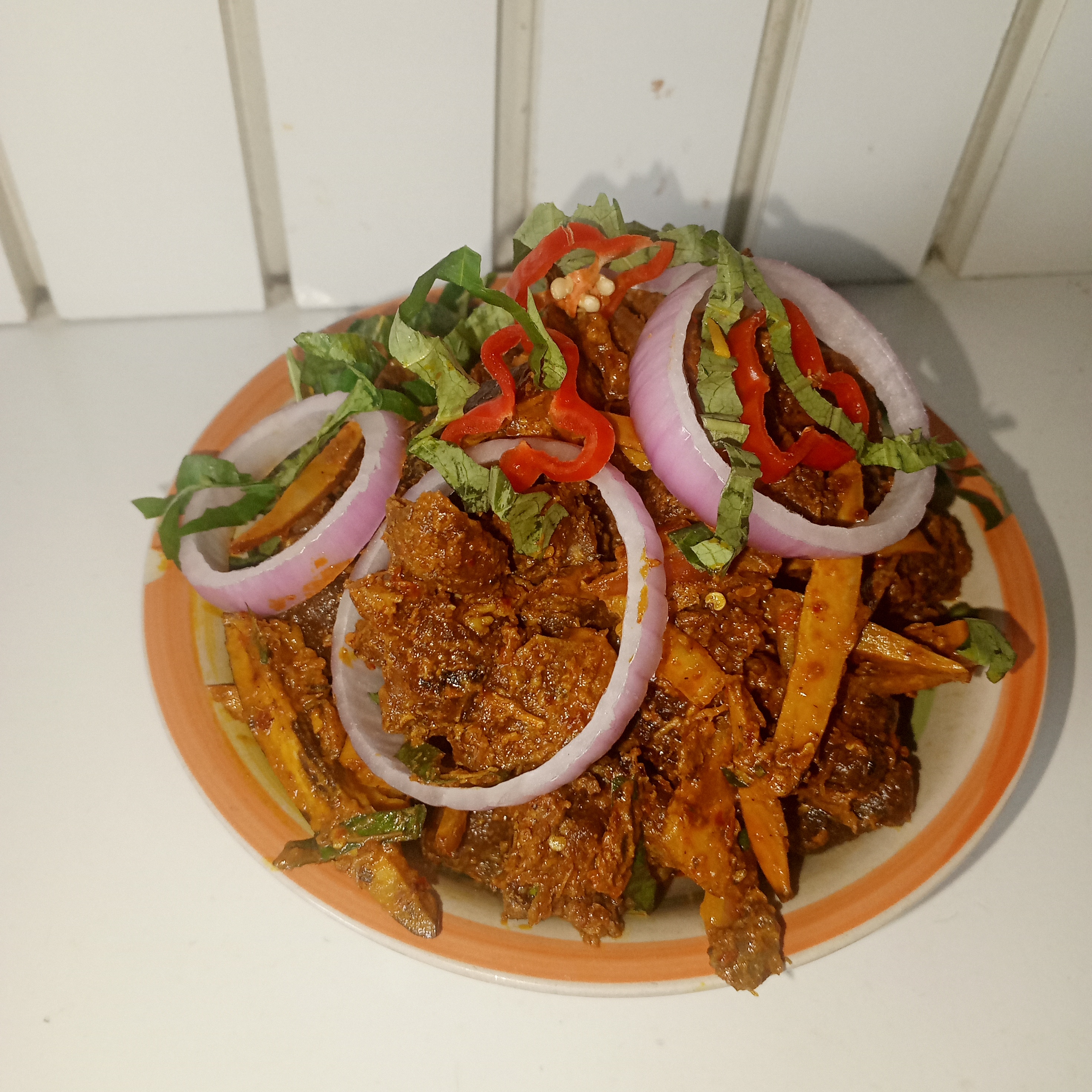
If you have ever ordered Nkwobi at a Nigerian restaurant and wondered why it tastes so rich, spicy, and deeply satisfying, you are not alone. That glossy palm oil sauce. The tender, well-seasoned goat meat. The slight bitterness of utazi cutting through the richness. Nkwobi is not just food. It is an experience. Often served in small wooden bowls at gatherings, bars, and celebrations, this traditional Igbo delicacy is bold, flavorful, and surprisingly easy to make at home once you understand the technique.In this step-by-step guide, I will show you exactly how to make authentic Nigerian Nkwobi using goat meat, palm oil, and potash — with clear instructions and practical tips to get it right the first time.
What Is Nkwobi?
Nkwobi is a popular Nigerian delicacy traditionally made with cow foot. However, many people prefer the goat meat version because:
- It cooks faster
- It has a richer flavor
- It is less gelatinous
- It feels lighter but still indulgent
The dish is prepared by coating cooked meat in a thick, emulsified palm oil sauce made with potash (akanwu), crayfish, pepper, and ogiri.
The key to perfect Nkwobi is not just cooking the meat — it is mastering the palm oil sauce.
Ingredients You’ll Need
For the Goat Meat
1 kg goat meat (cut into bite-sized pieces)
1 teaspoon salt
2 seasoning cubes
1 small onion (sliced)
1 teaspoon ground pepper
Water (enough to cook meat)
For the Palm Oil Sauce
¾ cup palm oil (not bleached)
1 teaspoon potash (akanwu)
2 tablespoons ground crayfish
1 teaspoon ground pepper (adjust to taste)
1 tablespoon ogiri (locust bean paste)
1 seasoning cube
Salt (if needed)
1 small onion (chopped)
Utazi leaves (thinly sliced, for garnish)
Cooking Tools You’ll Need
You do not need anything fancy, but these tools make the process easier:
Heavy-bottom pot (for cooking goat meat)
Small bowl (for dissolving potash)
Wooden spoon (for mixing)
Serving bowl or wooden dish (for presentation)
Instructions
Step 1: Cook the Goat Meat Properly
Place goat meat in a pot. Add salt, seasoning cubes, onion and ground pepper. Add just enough water to cover the meat. Cook on medium heat until tender.
Goat meat can be slightly tough, so allow it enough time. Depending on the cut, this may take 45-60 minutes.
Important: Do not discard all the stock. You may need a few tablespoons later or freeze it as stock for another recipe.
Once tender, you can, set aside.
Step 2: Prepare the Potash Solution
Potash (akanwu) is what thickens and emulsifies the palm oil. Be careful, a little goes a long way.
Dissolve 1 teaspoon potash in 2–3 tablespoons water. Stir until fully dissolved. Let any residue settle.
Use only the clear liquid. Too much potash will make the sauce bitter and overly thick.
Step 3: Make the Palm Oil Sauce (The Most Important Step)
Pour palm oil into a dry bowl. Do NOT heat it.
Gradually add small amounts of the dissolved potash water while stirring continuously. As you stir, you will notice the palm oil changing:
It becomes thicker
It turns orange
It develops a creamy consistency
This is emulsification happening. Add potash slowly. Stop once the palm oil thickens to a creamy paste. Do not over-add.
Step 4: Season the Sauce
Now add: ground crayfish, ground pepper, ogiri, seasoning cube and chopped onions, Mix roughly.
Taste. Adjust salt and pepper if needed.
The sauce should be thick, creamy, spicy, rich and slightly aromatic from ogiri. If it is too thick, add 1–2 tablespoons of the reserved meat stock to loosen slightly.
Step 5: Combine Goat Meat and Sauce
Add the cooked goat meat into the palm oil mixture. Stir until every piece is well coated.
At this stage, the dish should look glossy and deeply orange. If the sauce feels too heavy, add a tiny splash of meat stock and mix again.
Step 6: Garnish and Serve
Sprinkle thinly sliced utazi leaves over the top. Utazi adds a mild bitterness that balances the richness of palm oil.
You can also garnish with: onion rings and fresh pepper slices. Serve in a traditional wooden bowl if available. Nkwobi is best served warm.
What Makes Good Nkwobi?
Perfect Nkwobi should be:
Creamy but not watery
Spicy but not overpowering
Rich but balanced
Tender and well-seasoned
The palm oil should coat the meat without dripping excessively.
Common Mistakes to Avoid
1. Adding Too Much Potash
This makes the sauce overly thick and slightly bitter. Always add gradually.
2. Heating the Palm Oil
Do not heat palm oil before mixing. It prevents proper emulsification.
3. Underseasoning the Goat Meat
Season the meat well during cooking. The sauce enhances flavor — it does not fix bland meat.
4. Overcooking the Sauce
Nkwobi sauce does not require cooking once mixed. Just combine and serve warm.
Can You Make Nkwobi Without Potash?
Traditionally, no.
Potash is what creates the thick palm oil texture. Without it, the sauce will remain oily and thin.
However, if unavailable, you can use very little baking soda as a substitute. But use carefully — too much affects taste.
How to Store Leftover Nkwobi
Store in an airtight container in the refrigerator for up to 2 days.
To reheat: Warm gently over low heat. Do not microwave for too long, as the palm oil may separate.
What to Serve with Nkwobi
Nkwobi is often served alone as a delicacy. But it pairs beautifully with:
Chilled drinks
Palm wine
Garden egg slices
Abacha (African salad)
You can link here to your future Abacha post.

How to Make Nkwobi (Authentic Nigerian Goat Meat Recipe)
Course: Nigerian cuisines4
servings15
minutes45
minutes300
kcal1
hourIngredients
- For the Goat Meat
1 kg goat meat (cut into bite-sized pieces)
1 teaspoon salt
2 seasoning cubes
1 small onion (sliced)
1 teaspoon ground pepper
Water (enough to cook meat)
- For the Palm Oil Sauce
¾ cup palm oil (not bleached)
1 teaspoon potash (akanwu)
2 tablespoons ground crayfish
1 teaspoon ground pepper (adjust to taste)
1 tablespoon ogiri (locust bean paste)
1 seasoning cube
Salt (if needed)
1 small onion (chopped)
Utazi leaves (thinly sliced, for garnish)
Directions
- Place goat meat in a pot. Add salt, seasoning cubes, onion and ground pepper. Add just enough water to cover the meat. Cook on medium heat until tender.
- Dissolve 1 teaspoon potash in 2–3 tablespoons water. Stir until fully dissolved. Let any residue settle.
- Pour palm oil into a dry bowl and gradually add small amounts of the dissolved potash water while stirring continuously. Stop once the palm oil thickens to a creamy paste and turns orange.
- Now add: ground crayfish, ground pepper, ogiri, seasoning cube and chopped onions, Mix roughly.
- Taste. Adjust salt and pepper if needed.
- Add the cooked goat meat into the palm oil mixture. Stir until every piece is well coated.
- Sprinkle thinly sliced utazi leaves over the top. You can also garnish with: onion rings and fresh pepper slices. Serve in a traditional wooden bowl if available. Nkwobi is best served warm.
Cultural Note
In many Nigerian gatherings, Nkwobi is considered a “special” dish. It is served at:
- Celebrations
- Meetings
- Traditional ceremonies
- Relaxed evening hangouts
Its bold flavor makes it memorable.
Frequently Asked Questions
Why is my Nkwobi watery?
You may have added too much stock or not enough potash.
Can I use cow foot instead?
Yes. That is the traditional version.
Can I use beef?
You can, but it will not have the same flavor depth as goat meat.
🌿 From My Curious Kitchen
Thanks for stopping by! If you enjoyed this post, subscribe to get more homemade recipes and traditional food stories straight from my kitchen to yours.

Leave a Reply