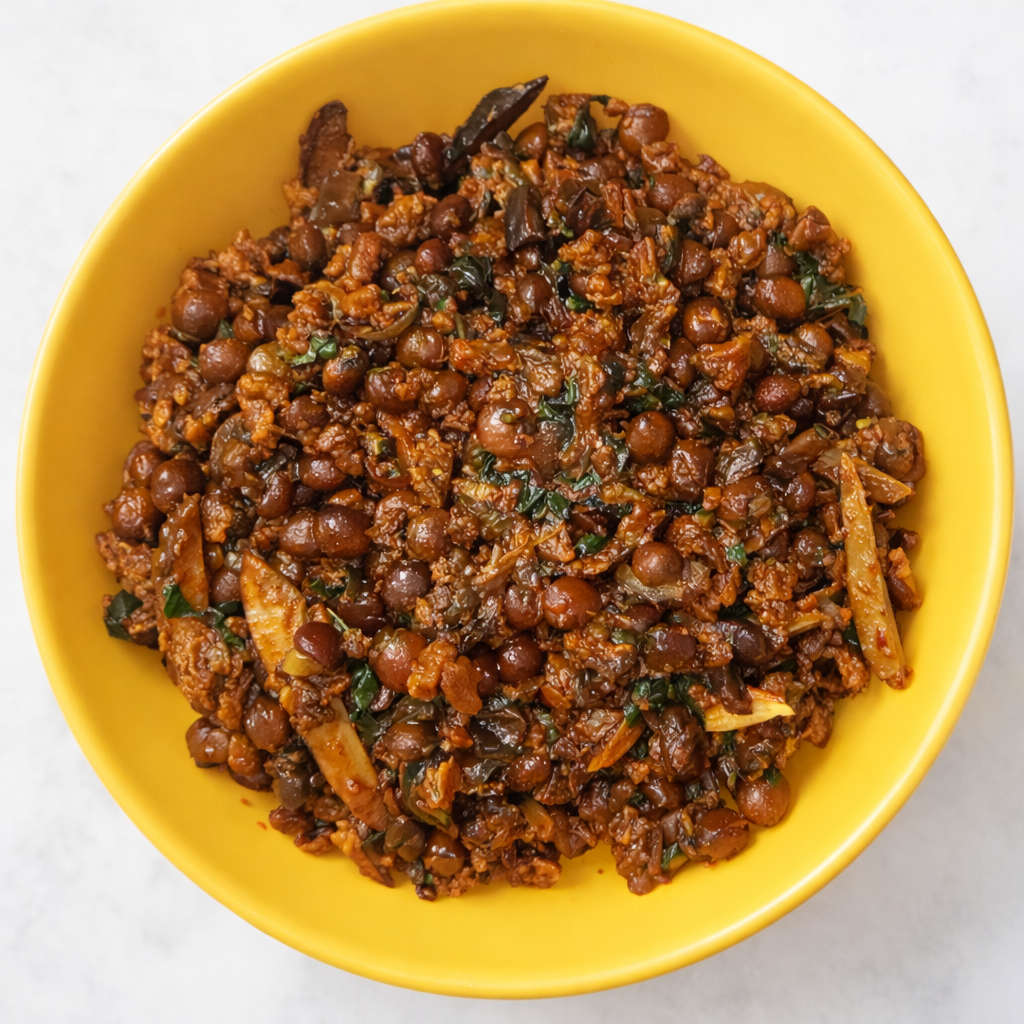
Achicha and fio fio is a traditional Nigerian dish popular in Enugu and other parts of Eastern Nigeria. Made with dried cocoyam flakes and pigeon peas, it is a simple yet rich and satisfying meal.
If you’ve never tried it before, this recipe will guide you step-by-step so you can recreate the authentic taste at home. It’s hearty, nutritious, and perfect when you want something filling without complicated ingredients.
In this post, you’ll learn how to cook achicha and fio fio easily, along with helpful tips to get the texture and flavor just right.
🛒Ingredients for Achicha and Fio Fio
- 2 cups achicha (dried cocoyam flakes)
- 1 cup fio fio (pigeon peas)
- 4 cups palm oil (adjust as needed)
- 4-5 medium onions
- 3-4 tablespoon ground crayfish
- A handful or two of Ugba(oil bean)
- Salt to taste
- 4-5 fresh yellow peppers
- Seasoning cubes to taste
- 2 handful of scent leaves(shredded)
- Water as needed
- Smoked fish (optional)
How to Cook Achicha and Fio Fio
Prepare the fio fio
Wash and cook the pigeon peas in water until soft. Drain and set aside.
Prepare the achicha
Place the achicha in a bowl and rinse thoroughly to remove dust. Wrap in a food-safe bag or steaming cloth and steam it inside the cooking fio fio.
Cook the sauce
In a pot, add palm oil and sliced onions. Allow to heat gently, then add crayfish, seasoning cube, salt, ugba and scent leaves. Stir well.
Combine fio fio and achicha
Mix the cooked fio fio and achicha together and add to the pot and stir well until thoroughly coated with the sauce. Add smoked fish if using, so that it is also coated with the sauce.
Simmer and finish
Allow to simmer for 3-5 minutes, stirring occasionally until everything comes together.
Tip: Fio fio requires a lot of oil because the sauce only has oil and no water in it, enough to coat it very well, remain moist and not feel dry. This is very important in order to enjoy this dish perfectly well!

Achicha and Fio Fio (Dry cocoyam flakes and pigeon peas) Recipe
Course: Main4
servings15
minutes1
hour300
kcal1
hour15
minutesIngredients
2 cups achicha (dry Cocoyam flakes)
1 cup fio fio (pigeon peas)
4 cups palm oil (adjust as needed)
4 tablespoons ground crayfish
4-5 medium onions
4-5 fresh yellow peppers
A handful or two of Ugba(oil bean)
Salt to taste
Seasoning cubes to taste
2 handful of scent leaves(shredded)
Water as needed
Smoked fish (optional)
Directions
- Prepare the achicha and fio fio
- Wash and cook the pigeon peas in water until soft. Drain and set aside. Pour the achicha in a bowl and rinse thoroughly to remove dust. Tie it inside nylon and steam it inside the cooking fio fio. Cook both together until they are cooked and soft.
- Cook the sauce
- In a pot, add palm oil and sliced onions. Allow to heat gently, then add crayfish, seasoning cube, salt, ugba and scent leaves. Stir well.
- Combine fio fio and achicha
- Mix the cooked fio fio and achicha together and add to the pot and stir well until thoroughly coated with the sauce. Add smoked fish if using, so that it is also coated with the sauce.
- Simmer and finish
- Allow to simmer for 3-5 minutes, stirring occasionally until everything comes together.
Recipe Video
🍽️ Serving Suggestions
Fio fio is quite filling on its own, but here are a few ways I like to serve it depending on the occasion:
On its own: Enjoyed warm as a comforting one-pot meal.
With a side of vegetables: Shred some fresh utazi leaves and raw onions for light garnish.
As a light dinner: I often have fio fio in the evening when I want something satisfying but not too heavy.
Frequently Asked Questions
What is the difference between achicha and fio fio?
Achicha refers to dried cocoyam flakes, while fio fio is pigeon peas. They are cooked together to create a complete meal.
Why does fio fio take longer to cook than regular beans?
Fio fio is a legume, but it is firmer than regular beans and naturally takes longer to soften. It can take up to an hour or more to cook, especially when prepared without any cooking aid.
Is a pressure pot recommended for cooking fio fio?
Yes. A pressure pot significantly reduces cooking time and is one of the easiest ways to get fio fio tender without constant monitoring.
What if I don’t have a pressure pot?
If you don’t have a pressure pot, fio fio can still be cooked on the stovetop, but it will require more time and patience. Adding water gradually and allowing it to simmer gently helps prevent it from burning before it softens.
Can whey be used when cooking fio fio?
This is something I’ve personally tried and I can say that whey actually does help to reduce the cooking time to an extent. Whey is sometimes used in soaking or cooking legumes, and while results may vary, it may help with hydration and flavor. If you decide to try it, use it as part of the cooking liquid and observe the texture as it cooks. As with all kitchen experiments, results can differ.
How do I know when fio fio is properly cooked?
Fio fio is ready when it is soft but still holds its shape. It should not feel hard when bitten.
My Fio Fio Cooking Journey
Fio fio is often associated with Enugu, and it was there that I first tasted it while studying at the university. Years later — about seven years after, I finally decided to cook it myself. The first attempt wasn’t a disaster, but it didn’t give me the feeling I was looking for.
I even called three friends from different parts of Enugu to ask questions and compare methods, trying to understand what I was missing.
The second time, everything came together. I adjusted a few things, took my time, and even used dry fish — and that was when it finally felt right. Since then, it has become a meal my family always look forward to.
Conclusion
Achicha and fio fio is a simple yet deeply satisfying traditional meal that brings together rich flavors and nourishing ingredients. Whether you’re trying it for the first time or recreating a familiar taste, this recipe makes it easy to enjoy an authentic dish at home.
With the right technique and a little patience, you can achieve the perfect texture and flavor every time. Don’t forget to experiment with your preferred ingredients and make it your own.
If you enjoy traditional meals like this, you may also like my guide on how to make abacha without potash.
Leave a Reply